Noseflute User Guide
中文Introduction
The noseflute is a musical instrument played with the nose. Compact and portable, it can be taken out and played anywhere, making it ideal for self-taught hobbyists.
Structure
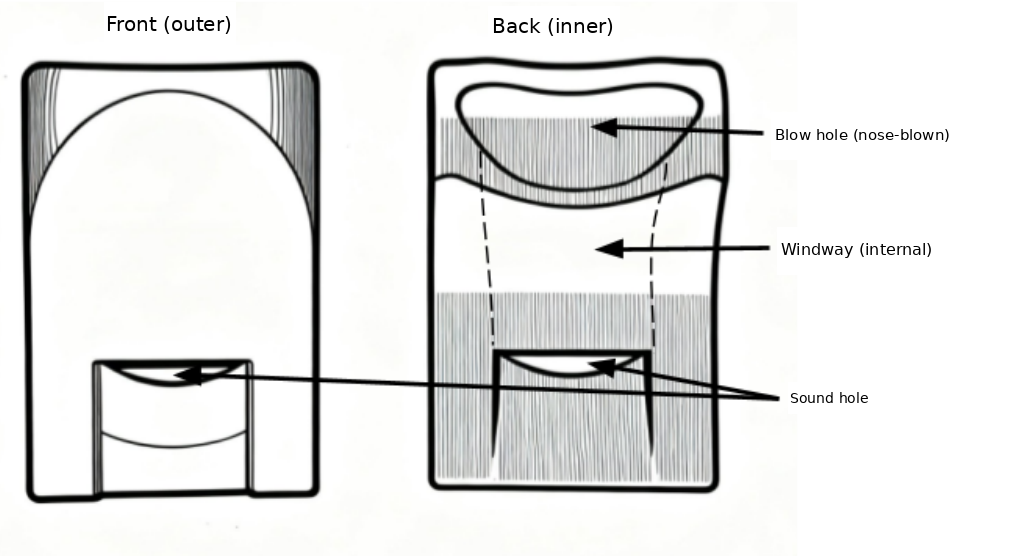
This is a mouth-driven noseflute. It consists of three parts: the blow hole, the windway, and the sound hole. The player blows into the blow hole with the nose; the air stream travels through the windway and strikes the edge of the sound hole, producing sound through the resonance of the oral cavity.
Playing
Playing a Single Note
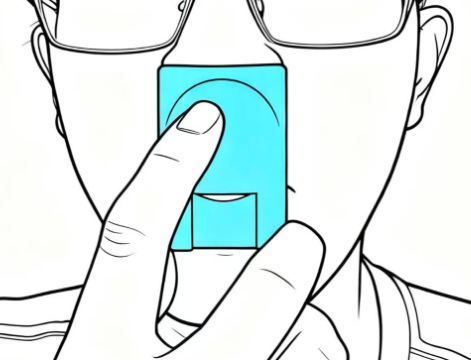
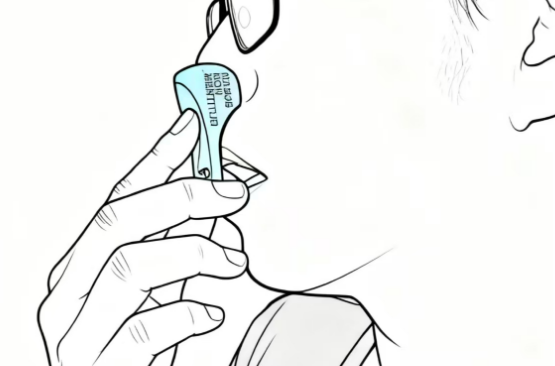
Hold the flute with one hand, either left or right. Place a nostril gently over the blow hole so the nose covers it. Let your lips touch the upper and lower edges of the sound hole. Blow gently through the nostril into the blow hole. Adjust breath pressure and lip shape until a clear tone is produced.
Playing Melodies
Change the shape of your oral cavity by opening your mouth or by controlling your tongue. A smaller oral cavity produces a higher pitch; a larger oral cavity produces a lower pitch.
Staccato Technique
Use throat articulation. Tongue articulation is not recommended, as it can affect intonation.
How to Practice
The noseflute is easy to learn. With ten minutes of practice a day, you will be able to play simple tunes within a month or two. Recommended practice order: single notes, then the middle register, the high register, and finally the low register. Master each stage before moving on to the next.
Improving Intonation
As a fretless instrument, the noseflute can be challenging to play in tune. To improve intonation, first practice keeping your oral cavity stable while playing so the pitch does not drift. Then practice with a tuning app or a tuning fork. Playing along with recordings is also helpful.
Playing Low Notes
The noseflute's pitch is relatively high. If you struggle to reach low notes, try moving your lower lip below the flute. The two fingers holding the flute can also cover the corners of your mouth to improve low notes.
Other Techniques
Wiggling the fingers that cover the corners of your mouth produces vibrato. Sliding the flute back and forth while playing creates interesting effects.
Care
Because the windway is very short, this product does not need frequent cleaning. To clean, rinse the windway from the blow hole with clear water, then dry in a cool place. Do not use organic solvents or water hotter than 50°C (122°F), and do not expose the product to direct sunlight, or it may be damaged.
Video Tutorial
Scan the QR code below to watch the Noseflute Playing Guide video collection.
Loading QR code…
Purchase
If you are interested in the noseflute, scan the QR code below to visit our shop.
Loading QR code…